The OPD Rush Hour
· HextGen Team
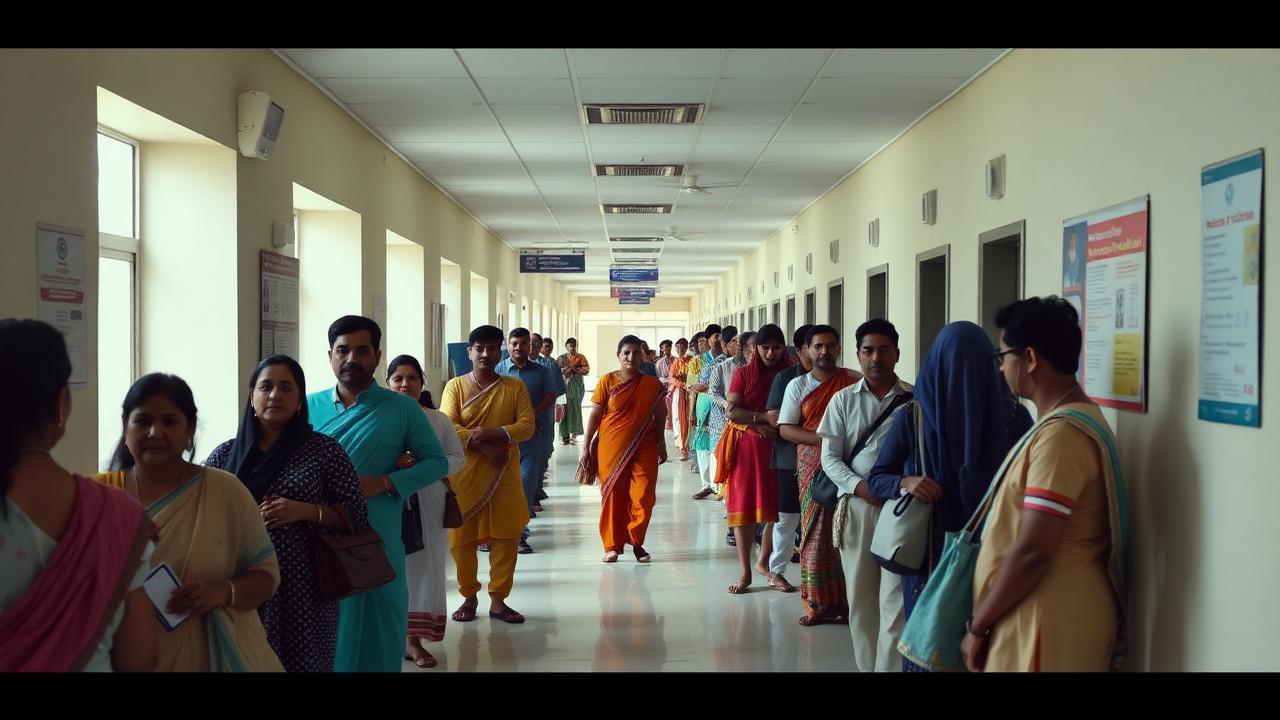
The OPD Rush Hour
When 40 Patients Arrive and the System Cannot Keep Up — The OPD Crisis Facing Indian Clinics.
Every morning across thousands of standalone clinics and private hospitals in India's tier 2 and tier 3 cities, the same crisis plays out. The OPD fills faster than the front desk can register patients. The pharmacist manages a queue of his own. The billing counter has three people waiting. And somewhere in the middle, a doctor is trying to give each patient the clinical attention they came for.
This is not a people problem. This is a systems problem. And it is one of the most damaging, most consistent and most underaddressed operational failures in Indian healthcare today.
The Scale of the OPD Challenge
India's standalone clinics and private hospitals handle some of the highest patient volumes in the world. With over 260,000 standalone clinics and 60,000 private hospitals operating across the country, the majority of India's primary and secondary healthcare burden falls on facilities that are owner-operated, understaffed relative to demand and equipped with digital infrastructure that was never designed to handle surge volumes.
Tier 2 and tier 3 cities carry a disproportionate share of that burden. Cities like Nalgonda, Siddipet and Nagole serve large patient populations with a fraction of the operational infrastructure available to corporate hospitals in metro markets. The result is an OPD environment that operates at the edge of its capacity every single day.
What Happens When OPD Systems Fail
Patient registration slows down, creating a queue at the front desk that backs up into the street. Prescription generation becomes a bottleneck as doctors wait for patient records that cannot be retrieved quickly. The pharmacy counter receives handwritten prescriptions that have to be manually interpreted. The billing department falls behind. And patient waiting times extend from minutes to hours.
In a high-volume OPD environment, a slow system is not just an inconvenience. It is a clinical risk. Patients who wait too long leave without being seen. Doctors who are rushing between patients make decisions with incomplete information. Staff who are overwhelmed make data entry errors that affect billing accuracy, pharmacy records and patient histories.
How HextGen AI Solves It
HextGen AI was built specifically for the high-volume, resource-constrained OPD environments that define healthcare delivery in India's tier 2 and tier 3 markets. HextGen's AI-powered OPD management system integrates patient registration, queue management, digital prescription generation, pharmacy dispensing and billing reconciliation into a single real-time workflow.
When a patient is registered, their information is immediately available to the consulting doctor, the pharmacy and the billing counter simultaneously. When a doctor generates a digital prescription, it flows directly to the pharmacy without any paper intermediary. When a consultation is completed, the billing entry is automated from the clinical data already in the system.
The Business Case
Every patient who leaves without being seen is a consultation fee that was never collected. Every billing error created by a rushed OPD process is revenue that requires expensive manual reconciliation. A clinic whose OPD operates smoothly at high volume sees more patients per session, collects more revenue per day, makes fewer billing errors and builds the kind of patient experience reputation that drives word of mouth growth in close-knit tier 2 and tier 3 communities.
When the system works, 40 patients stop being a crisis. They become a well-managed morning.